Campaign for Nuclear Disarmament
My PolicemanThe Campaign for Nuclear Disarmament appears in the novel as a peace movement whose public argument against nuclear testing is carried into ordinary local life. Through a Brighton meeting and Marion Burgess’s later work to establish a group at her school, the campaign offers her a practical form of political participation: listening, distributing information, and helping others engage with the threat she has come to take seriously.
Aims and public message
The campaign’s immediate focus in these scenes is opposition to hydrogen-bomb testing. In conversation with Julia Harcourt, Marion says she finds the tests terrifying and expresses interest in joining the campaign against them. Julia explains that the movement holds regular meetings in town and invites her to attend, presenting the work as a need to spread awareness before disaster occurs. Her account contrasts the urgency of nuclear danger with the public’s attention to royal clothing.
At the Brighton meeting, the speaker develops that case beyond opposition to a particular test. He argues that survival must come before political differences such as democracy or freedom, and that the destruction a nuclear attack could cause makes ordinary political disputes seem secondary. He also states that hydrogen-bomb tests could cause cancer and should be stopped. Britain, he argues, could set an example for other countries. The meeting therefore frames disarmament both as an immediate response to physical danger and as a responsibility Britain could exercise internationally.
Brighton meeting and methods
Marion attends a meeting at the Friends’ Meeting House after worrying that her clothes will not suit the occasion. She chooses a plain navy skirt, a light pink blouse, and a cream cardigan with blue buttons. The gathering is modest: she estimates that about thirty people are in the lecture room. A banner identifies the local campaign, while cups and an urn of tea stand on a table at the back. This is not a mass demonstration but a small local assembly where a newcomer can arrive, take a seat beside Julia, and hear the case for action directly.
The speaker’s manner helps shape the meeting’s appeal. Rather than relying on shouting or dramatic gestures, he speaks calmly and confidently, and the room listens in silence. His presentation makes the campaign’s argument seem reasoned and urgent at once. The audience responds with applause, nods, and murmurs of agreement, while one woman’s emphatic interjections provide a brief counterpoint to the speaker’s measured style.
The movement’s method depends on its supporters carrying its message outward. The speaker names Benjamin Britten, E.M. Forster, and Barbara Hepworth among those who have lent their voices to the campaign, but stresses that recognition from prominent figures is not enough. He asks the people in the room to take leaflets and distribute them in public houses, classrooms, and churches. Tea and leaflets share the same meeting space: a practical arrangement that makes the gathering both a place of discussion and a starting point for further outreach.
Marion’s participation and its development
For Marion, attending is a change from tentative interest to action. She has told Julia she is considering joining, while recognizing that the decision is only just taking shape as she speaks. At the meeting, she listens as a new face among the small crowd and begins to imagine herself as part of a collective effort. The scene makes participation concrete: she has come to a local room, sat beside her friend, and heard what supporters are expected to do next.
Her response is also connected to her personal and cultural life. As the speaker names writers and artists whose work Marion and Tom have encountered through Patrick, she thinks Patrick would be pleased to see her taking a stand. She also hopes that Tom might come to share that pride. The campaign’s appeal thus reaches beyond policy: it gives Marion a possible point of connection between her convictions, her friendships, and the values she would like her husband to respect.
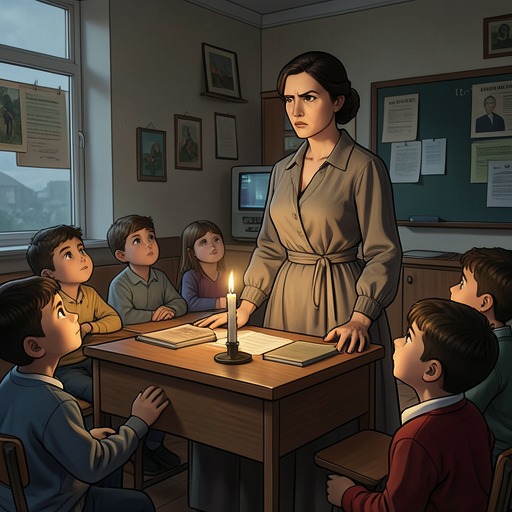
Later, Marion records that she started a school group for the Campaign for Nuclear Disarmament. She also becomes deputy head at St Luke’s Infants’ School and, though she never joins a women’s march, takes an evening course in feminism and literature at Sussex University. These details show that her involvement with the campaign persists beyond the single meeting and enters her professional life. The evidence does not describe the school group’s activities, but its existence marks a development from attending a local gathering to creating an avenue for others to participate.
Significance in the narrative
The campaign gives Marion a public cause through which to test a more active sense of herself. Before the meeting, she measures her clothes against an imagined activist uniform; once there, she finds that Julia’s vivid dress and the varied gathering make blending in less important than being present. The modest scale of the room also counters the idea that political action belongs only to prominent figures: the speaker’s list of well-known supporters is followed by an appeal to local people to do the work of circulation.
The later school group extends that principle into Marion’s working life. The movement is not depicted through a national organizational structure or a complete record of its campaigns, but through the local practices shown on the page: meetings, persuasion, leaflets, and education. Its narrative significance lies in this movement from concern to participation, and in the way a campaign against nuclear danger becomes one of the lasting commitments Marion can claim as her own.